
Heritage preserved by communities
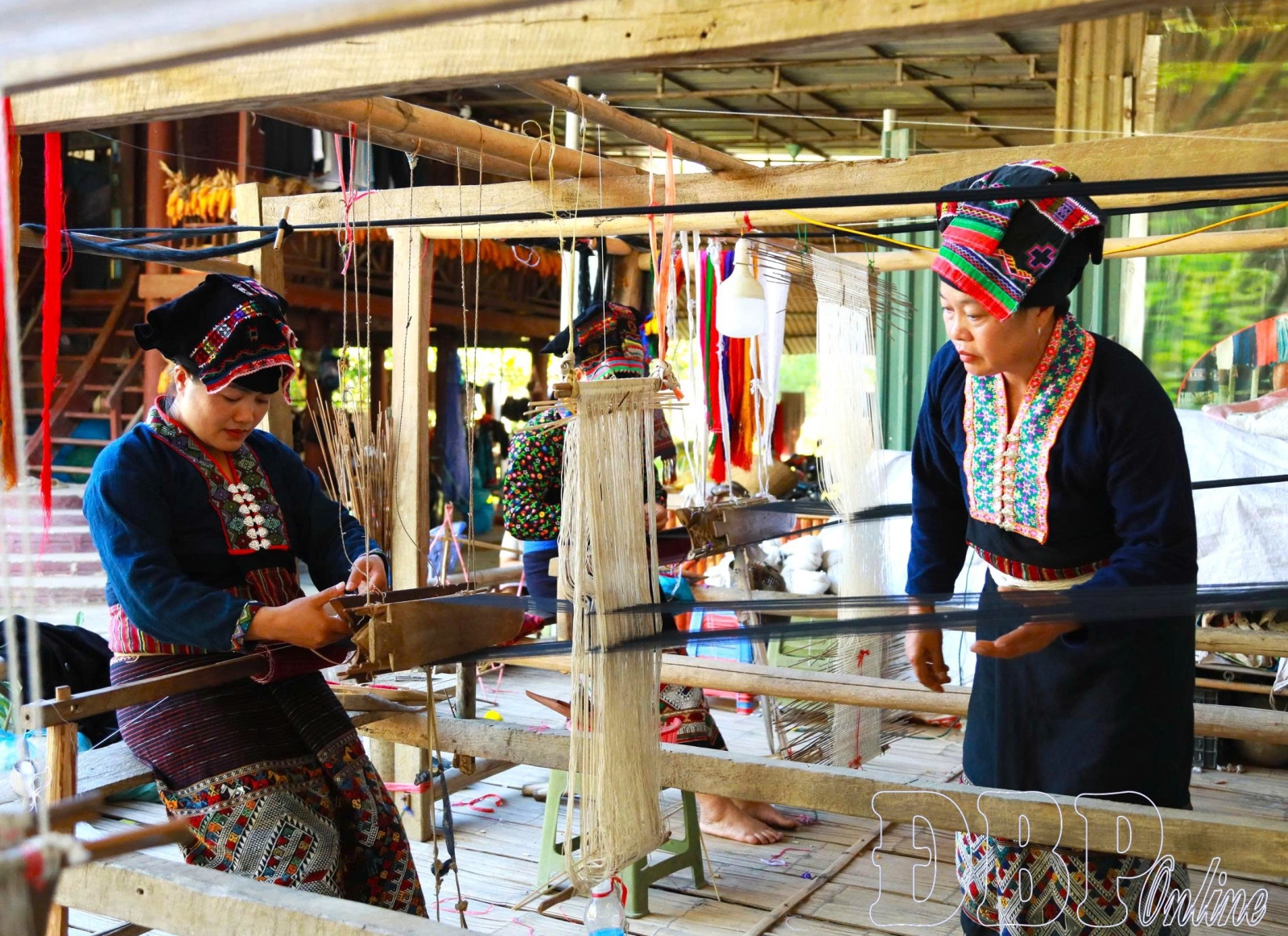
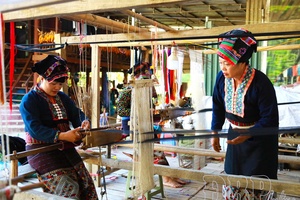
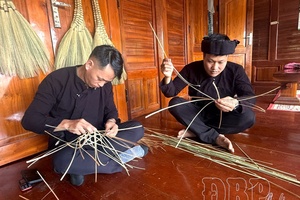
In Na Sang village, Núa Ngam commune, the looms of the Nang Bua Brocade Cooperative continue to clatter steadily. Surrounded by colorful rolls of thread, Lao ethnic women work diligently to weave fabrics featuring distinctive traditional patterns. Each piece requires not only skill and precision but also knowledge, experience and aesthetic values passed down through generations.
With the aim of sustaining their traditional craft and bringing together people who share the same passion, seven members established the Nang Bua Brocade Cooperative in 2024. Rather than producing fabric solely for traditional clothing, members are now expanding their range to include garments, dresses, bags, scarves and other brocade products for the market.
Nearly 70 years old, Lường Thị Ún has spent more than five decades practicing the craft. She learned to weave at the age of 15 and has carried those techniques with her throughout her life. For her, the goal is not simply to create beautiful products, but also to pass on her knowledge so that the traditional craft of her ethnic community does not disappear.
“What matters most to us is that while designs, styles and uses of our products may change, the weaving techniques and distinctive patterns must be carefully preserved. This is how our traditional craft can adapt to modern life without losing its original identity,” she said.
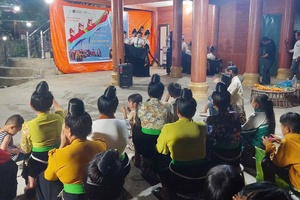
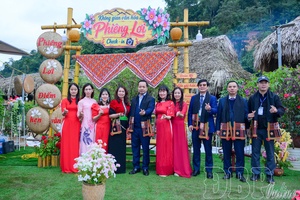
In Púng Bon village, Thanh Yên commune, the Mền Loóng Phạt Ái Festival (Cock’s Comb Flower Festival), a national intangible cultural heritage, is also being preserved through the community’s own efforts. Held annually around November, it is the biggest festival of the year for the Cống people in Điện Biên. It provides an opportunity for the community to perform traditional rituals, express gratitude to their ancestors and deities, and pray for health, peace and bountiful harvests.
This year’s festival featured additional cultural exchange activities, including displays of traditional costumes, customs and cuisine, as well as reenactments of Cống rituals. These activities give local residents, especially younger generations, an opportunity to learn more about and strengthen their connection with their cultural traditions, while allowing visitors to discover the community’s distinctive heritage. Through the festival, longstanding customs are remembered and passed on from one generation to the next.
Nạ Văn Phanh, a resident of Púng Bon village, said: “The Cock’s Comb Flower Festival involves the entire Cống community. Preserving the festival is not simply about continuing to hold the annual celebration; it also means ensuring that young people understand the origins and significance of its rituals. If they simply follow established practices without understanding the culture behind them, the transmission of these traditions may gradually break down. That is why preservation begins with everyday activities in each family: growing flowers, preparing produce from the fields, joining grandparents in performing rituals and taking part in community activities.”
The stories of Na Sang and Púng Bon illustrate different ways in which Điện Biên’s ethnic communities are preserving and passing on their intangible cultural heritage. To date, 24 of the province’s heritage elements have been included in the National List of Intangible Cultural Heritage. Two have also been recognized by UNESCO: the Then practices of the Tày, Nùng and Thái peoples in Viet Nam, and the Art of Xòe Dance of the Thái people. Each heritage element has its own distinctive value and is being preserved and promoted in ways suited to the customs, traditions and circumstances of each community, helping safeguard the cultural identities of Điện Biên's ethnic groups.
Turning cultural heritage into a driver of development
To strengthen the link between heritage preservation and local development, Resolution No. 12-NQ/TU, issued by the provincial Party Committee on December 31, 2025, on tourism development in Điện Biên for 2026-2030, with a vision to 2035, sets out the goal of making tourism a key economic sector through green, smart and sustainable development. This approach is closely tied to preserving, restoring and promoting heritage values and protecting the ecological environment.
In addition, Plan No. 34-KH/TU, issued by the Standing Board of the provincial Party Committee on February 28, 2026, to implement the Politburo’s Resolution No. 80-NQ/TW dated January 7, 2026, on Vietnamese cultural development, provides a framework for translating cultural preservation and promotion objectives into concrete tasks, while assigning responsibilities to authorities at all levels and sectors and encouraging public participation.
To ensure resources were available from the beginning of 2026, the provincial People’s Committee allocated more than VND 164.6 billion in recurrent expenditure for the cultural sector, including over VND 93.6 billion at the provincial level and more than VND 71 billion at the commune level. A further VND 195.3 billion was allocated to implement the National Target Program on Cultural Development. These funds are focused on preserving and promoting the cultural identities of ethnic communities and improving the quality of the cultural workforce.
According to Trần Hải Hà, Director of the Department of Culture, Sports and Tourism, heritage preservation can only be sustainable when cultural values remain part of community life and continue to engage the public. For Điện Biên, promoting heritage requires simultaneous efforts on several fronts: improving the management and protection of historical and cultural sites; renewing exhibitions and interpretation activities; expanding spaces for traditional cultural practices; and strengthening links between heritage, education, research and tourism development.
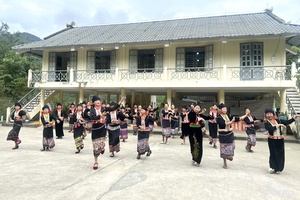
In line with this approach, Điện Biên is not only preserving and passing on cultural traditions within communities but also identifying and documenting additional heritage elements of particular significance. In 2026, the Cống people’s traditional dance was added to the National List of Intangible Cultural Heritage. The province is also preparing nomination dossiers for the Thái people’s traditional Còn-throwing game and the Hmông people’s Tù lu spinning-top game.
At the same time, new tourism products are being researched and developed, including live performances at A1 Hill historical site, the “Legend of U Va” show, night tours, the Điện Biên Phủ film set and the Điện Biên 360 digital platform. These initiatives will provide new spaces for cultural and historical values to reach wider audiences, turning them into engaging and accessible experiences for visitors.
Điện Biên’s cultural heritage is being preserved in many different ways. As long as people remain connected to their traditional crafts, rituals and customs continue to be practiced, and younger generations embrace the values passed down by their ancestors, heritage will be more than a source of pride about the past, recalled only through official titles and statistics. It will remain a living part of contemporary life, helping define the province's distinctive identity and appeal.
Thu Hằng

You have 500/500 characters left
Please enter 5 or more characters!!!